Hinduism is a religion.
While Hindutva is a political and cultural ideology that seeks to define Indian identity primarily in terms of Hindu culture and religion. Thus, Hindutva does not just refer ...
Firstly:
Hinduism is a religion.
While Hindutva is a political and cultural ideology
that seeks to define Indian identity primarily in terms of Hindu
culture and religion. Thus, Hindutva does not just
refer to religious Hinduism, but rather to a political-cultural
ideology that sees India as fundamentally a Hindu nation. Hindutva is
just like "Political Islam". Both of them are not seen as peaceful
movements.
Secondly:
Hindutva supporters assert that Vedic (Hindu) gods created the
universe and then mankind, completely rejecting the theory of human
evolution, just as many traditional religions across the world tend to
do. However, scientific and archaeological evidence paints a very
different picture, one grounded in facts, not faith.
Thirdly:
Despite popular beliefs, Hinduism in its recognizable Vedic form
does not predate 3,500–4,000 years. The earliest
elements of what we now call Hinduism were introduced by Indo-Aryan
migrants who came into the Indian subcontinent from the
Pontic-Caspian Steppe (present-day Ukraine, Russia, and
Kazakhstan). These people brought with them:
The Sanskrit language, the root of many modern
Indian languages;
The Vedas, foundational religious texts of
Hinduism;
And other cultural elements that shaped early Indian
civilisation.
Yet, modern Hindutva ideology denies this migration
theory entirely. Instead, it promotes the "Out of
India" theory (OIT), which falsely claims that Aryans were
native to India and later spread outward to Europe. However, this view
is not supported by mainstream scholarship or genetic science.
Fourthly:
Archaeologists and historians agree that there is no trace of
Vedic religion, Hindu deities, Sanskrit language, or temple
worship in the Indian subcontinent before 1500 BCE.
No temples or idols of Hindu gods
No inscriptions or artifacts related to any sign of
Hinduism
And even not a singlecave paintings of anything
related to Hinduism
All point to the same conclusion: Hinduism did not exist in India
prior to the arrival of Indo-Aryans.
Fifthly:
The Indus Valley Civilization (IVC)—which thrived
between 2600 and 1900 BCE in parts of present-day Pakistan and northwest
India—was a remarkably advanced urban culture. Cities like
Harappa and Mohenjo-daro featured
complex drainage systems, granaries, and written scripts.
However, none of the artifacts recovered from IVC sites show any
connection to later Hindu beliefs:
No Vedas
No images of Hindu gods like Shiva, Vishnu, or
Brahma
No Sanskrit
No temples
This clearly indicates that the Indus Valley Civilization and
Hinduism were two separate cultural phases. The former declined
around 1900 BCE, while the latter only emerged with the migration of
Aryan peoples later.
Sixthly:
Genetic studies have added a critical layer of evidence to the Aryan
migration theory:
Indus Valley DNA shows no Aryan
ancestry, suggesting a complete absence of Steppe genetic
influence.
In contrast, modern North Indian high-caste
populations show clear signs of Steppe (Aryan) DNA,
especially in male Y-chromosomes (i.e. only male Aryans invaded and
migrated towards India).
This pattern suggests a historical scenario where Aryan males
entered India, possibly as warrior elites, and interbred with
the local population, shaping the gene pool and religious culture over
generations.
Seventhly:
One of the most telling archaeological markers of Aryan influence is
the horse:
No remains of horses or horse-drawn chariots
have been found in India before 1500 BCE.
There are no cave paintings or depictions of
horses in pre-Aryan Indian art.
The Rigveda, written by Indo-Aryans, includes
frequent references to horses and chariots—symbols of their mobility and
warfare.
These facts align perfectly with a post-IVC migration
scenario, in which Indo-Aryans brought new technologies and
animals previously unknown in the region.
Eightly:
The Rigveda, the oldest Hindu scripture, contains references to
geographic regions and conflicts that are consistent with a migration
narrative. These texts mention rivers, landscapes, and enemies that
match regions west of India, further strengthening the case for Aryan
migration into the subcontinent.
Conclusion:
Scientific evidence from archaeology,
genetics, and linguistics clearly
supports the idea that Hinduism, as we know it today, was not an
indigenous or eternal faith, but rather a product of
migration, cultural fusion, and evolution over time.
The belief that Hindu gods created the world and mankind is not
supported by any historical or scientific evidence. Instead,
Hinduism—like all religions—has a human origin rooted in a specific
time, place, and set of historical circumstances.
Hindutva followers claim that the Vedic gods were the oldest deities
who created the world and that the Vedic civilization was the most
ancient, known for its superior craftsmanship. However, if this were
true, why do depictions of Vedic gods not predate 3500 years, while
numerous other paintings and statues from different civilizations, much
older than 3500 years, have survived?
Despite these claims, there is no evidence of
Hinduism in India that is older than 3500 years. No
Hindu temples, sculptures of Hindu gods, cave paintings, or any
other archaeological proof exist from before this period.
The history of cave paintings in India or rock art range from
drawings and paintings from prehistoric times, beginning around 30,000
BCE in the caves of Central India, typified by those at the Bhimbetka
rock shelters.
There are tons of such cave paintings etc. are present (which are
older than 3500 years), but absolutely no proof of Vedic culture is
present.
Indus
Valley Civilization & DNA Evidence
DNA Analysis of Indus Valley Civilization
(IVC):
A 2019 genetic study (link)
analyzed the DNA of a Harappan woman from Rakhigarhi, one of the largest
cities of the Indus Valley Civilization.
The results showed no traces of Aryan (Steppe) DNA
in the Harappan population, meaning the people of IVC had no genetic
link to the later Aryan arrivals.
Genetic Shift in Modern Indians:
In contrast, present-day Indians have about 10% to 20% Aryan
(Steppe) DNA (link).
This suggests a significant genetic transformation after the decline
of the Indus Valley Civilization.
The Aryan Migration/Invasion Theory:
Scientists explain this genetic shift as the result of
Aryans migrating/invading from the Russian Steppe,
leading to the collapse of the IVC around 4000 years ago (Reference: livescience.com{.ml-1 .inline-flex .h-[22px]
.items-center .rounded-xl .bg-[#f4f4f4] .px-2 .text-[0.5em] .font-medium
.text-token-text-secondary .dark:bg-token-main-surface-secondary
.relative .top-[-0.094rem] .!text-token-text-secondary .uppercase
.hover:bg-token-text-primary .hover:!text-token-main-surface-secondary
.dark:hover:bg-token-text-primary .group target=“_blank”
rel=“noopener”}).
DNA studies confirm that only Aryan males migrated to
India—no Steppe-origin women were found in the genetic pool.
This means, as conquerors, Aryan males had privileged
access to local women, while indigenous men were marginalized. This led
to a significant presence of Steppe male DNA in modern
Indians, while the maternal lineage remained indigenous. This
genetic evidence strongly supports the theory that Aryans
arrived in India after the decline of the Indus Valley
Civilization, reshaping its
demographics and cultural landscape.
No
Hindu gods were found in Harappa or Mohenjo-Daro Archeaological
Sites
Although Hindutva followers claim that Indus Valley Civilization was
a Vedic Society, but they have not even a single proof to back up this
claim.
Absence of Hindu gods in the Indus Valley Civilization
(IVC)
Thousands of toys, seals, and idols were discovered in Harapa or
Mohenjo-Daro achaeological sites, however, not a single statues or
depictions of Hindu gods were found.
Lack of Hindu temples in the IVC
While many houses were found in the IVC, not a single Hindu temple
has been discovered in Harappa or across the entire Indus Valley.
Actually, the oldest Hindu temple (all across the Indian
Subcontinent), that has been found is the Mundeshwari
Temple, located in Kaimur district of Bihar, India. It is
believed to date back to 108 CE, making it only
about 1,900 years old.
Similarly, the oldest known statue of a Hindu or Vedic deity
(across all over India) is the Shiva
Lingam found at Gudimallam, Andhra Pradesh,
India. This Shiva Lingam dates back to
the 3rd–2nd century BCE (around 2000 years old) and is
considered one of the earliest representations of a Hindu deity.
The
Pashupati Seal: A Critical Examination
The Pashupati Seal, discovered in the Indus
Valley Civilization, has sparked significant debate among
historians, archaeologists, and religious groups. While
some Hindutva followers claim it as evidence
of Vedic or Hindu religion in the Indus Valley, a
closer examination reveals that these claims are speculative and lack
solid evidence. Let’s break down the arguments and analyze them
critically.
What is the
Pashupati Seal?
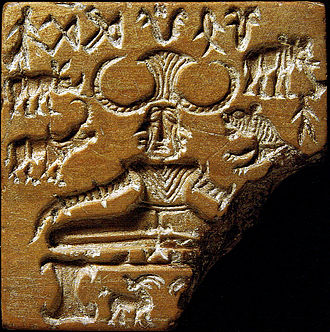
The Pashupati Seal is a small
steatite seal excavated from Mohenjo-Daro, a major site
of the Indus Valley Civilization (circa 2600–1900 BCE). It depicts a
figure seated in a cross-legged posture, surrounded by animals such as
elephants, tigers, and buffaloes. Some scholars have interpreted this
figure as a proto-Shiva, specifically in
his Pashupati (Lord of Animals) form. However, this
interpretation is not universally accepted and remains a subject of
debate.
Hindutva Claims
About the Pashupati Seal
Animals and Shiva’s Association:
Hindutva supporters argue that the presence of animals on the seal
aligns with Shiva’s role as the Lord of Animals
(Pashupati). They claim this similarity proves the figure is
Shiva.
Yogic Posture:
They also point out that the figure is seated in a posture
resembling Yoga, and since Shiva is considered
the master of Yoga, this further supports their
claim.
Our Response to
These Claims
Lack of Repetition:
Thousands of seals and artifacts have been unearthed from the Indus
Valley, but only one—the Pashupati Seal—shows a figure
resembling Shiva. If Shiva were a central deity of the Indus Valley
people, we would expect to find multiple depictions of
him across various artifacts. The absence of such evidence weakens the
claim.
No Direct Link to Shiva:
!(https://ii1.pepperfry.com/media/catalog/product/b/r/1100x1210/brown-polyresin-and-bronze-lord-shiva-padmasana-idol-by-ecraftindia-brown-polyresin-and-bronze-lord–y9dqdr.jpg){.float-end
width=“230” height=“253” style=“display: block; margin-left: auto;
margin-right: auto;”}The figure on the seal bears no resemblance to
later depictions of Shiva in Hindu iconography. For
example, Shiva is typically shown with specific attributes like
a trident (trishul), a crescent moon,
or a serpent, none of which appear on the seal. The
identification of the figure as Shiva is based solely on the presence of
animals, which is not conclusive evidence.
Speculative Interpretation:
The idea that the figure represents Shiva is
a hypothesis, not a proven fact. Scholars have proposed
other interpretations, such as the figure being
a shaman, a proto-yogi, or
a local deity unrelated to Hinduism. Without deciphered
Indus Valley scripts, these interpretations remain speculative.
Yoga in the Indus Valley:
There is no guarantee that the figure is sitting in a Yogic
posture. If the Indus Valley people practiced Yoga, we would
expect to find multiple seals or artifacts depicting
similar postures. However, no such evidence exists. The Pashupati Seal
stands alone, making it an unreliable basis for claiming the presence of
Yoga in the Indus Valley.
Comparison with
Celtic God Cernunnos
!(https://upload.wikimedia.org/wikipedia/commons/thumb/8/86/Gundestrupkedlen-00054%28cropped%29.jpg/450px-Gundestrupkedlen-00054%28cropped%29.jpg){.float-end
border=“0” width=“350” height=“238” style=“display: block; margin-left:
auto; margin-right: auto;”}Interestingly, the figure on the Pashupati
Seal bears a stronger resemblance to the Celtic god
Cernunnos than to Lord Shiva. Cernunnos, a
deity from Celtic mythology, is depicted with horns,
surrounded by animals, and seated in a posture similar to the Pashupati
Seal. He is associated with fertility, prosperity, and the Lord
of Animals, much like the figure on the seal.
In contrast, Lord Shiva in Hindu iconography is
never depicted with horns, and his Yogic postures differ significantly
from the figure on the seal. This raises questions about the validity of
linking the Pashupati Seal to Shiva.
Thus, the Pashupati Seal is an intriguing artifact,
but it cannot be considered definitive proof of the presence
of Hinduism or Vedic religion in the
Indus Valley Civilization. The claim that it depicts Shiva is based on
conjecture rather than concrete evidence. To assert that the Indus
Valley people followed Hinduism based on this single seal is an
overreach.
Present Indian population is a mixture of 3 ancestral groups:
Ancient Ancestral South Indians
The people of the Indus Valley Civilisation
People who migrated from the Pontic Steppe (commonly known as
Aryans).
None of these three groups exist today but it is their mixing that
caused most of the modern Indian population to be formed.
Of these, the Ancient Ancestral South Indians were present across
parts of the subcontinent that did not fall under the Indus Valley
Civilisation. Their closest modern-day relatives are the tribes of the
Andaman Islands.
Of these, the Indus Valley had no Steppe DNA. They mainly had a
mixture of Iranian-farmer-related DNA as well as some DNA from Ancient
Ancestral South Indians. In 2019, a latest research study came out
about the DNA sequencing of a woman from Indus Valley civilisation. Here is
the link to this study (link). This proves that Aryan
Invasion happened after the Indus Valley Civilisation had already been
destroyed some 4000 years ago.
Of these, the 3rd group, the Steppe population came in from
grasslands in Eastern Europe corresponding to modern-day Ukraine, Russia
and Kazakhstan. The genetic research identifies that this Steppe
ancestry burst into India during a “narrow time window” dated between
2,000 BC and 1,500 BC.
The impact of Yamnaya
steppe pastoralists
On 6th September 2019, a scientific study was published at Science
(link) by Dr. Reich's and his team. Theytook
a macro view, analysing genetic data from 523 ancient people spanning
8,000 years across Central and South Asia right up to the European
Steppe – the largest study of ancient human DNA.
The spread of the Steppe pastoralists and their descendants across
ancient Eurasia. The Steppe population is identified here using the name
Yamnaya which refers to an ancient archaeological culture on the Pontic
Steppe. It is the Yamnaya people who spoke the a language which was the
ancestor of every Indo-European language in existence today, be it
Bhojpuri or Welsh. The arrows show plausible routes while the years
refer to rough estimates of when the Yamnaya and their descendants
arrived in a place. Source: The formation of human populations in South
and Central Asia.
Once these Steppe people entered India, a great churning ensued. They
mixed with the Indus Valley people to create what is now called the
Ancestral North Indian grouping. However, a significant portion of the
people of the Indus Valley Civilisation were pushed south when the
Steppe people entered. They then mixed with the Ancient Ancestral South
Indians to form a group known as the Ancestral South Indian
population.
For the next 2,000 years, Indians mixed freely. As a
result, most modern South Asians are some mix of Ancestral North Indian
and Ancestral South Indian. However, this great churning stopped around
1,900 years ago when Indian society calcified into thousands of endogamous
groups who do not intermarry across caste lines – a societal
structure maintained
till today.
In South Asia, the Indo-European language family bought in by the
Steppe people forked to give rise to the Indo-Aryan daughter branch. The
first Indo-Aryan language in South Asia was Vedic Sanskrit, the language
of the Rig Veda.
Much of this Steppe ancestry is male, the research shows. This means
that Steppe migrants “were more successful at competing for local mates than
men from the local groups” – which tells us something about the
aggressive nature of Indo-Aryan migration into India.
The Science paper concludes that there was an “asymmetric
social interaction between descendants of Steppe pastoralists and
peoples of the Indus Periphery Cline [Indus Valley Civilisation]”.
In simpler language, David Reich explains that the
preponderence of male Steppe DNA means that this encounter between the
Steppe pastoralists and the people of the Indus Valley Civilisation
“cannot have been entirely friendly”.
This male bias is standard for Indo-European migration. In fact, when
these Steppe pastoralists reached Europe, Reich’s research found an even
larger proportion of male Steppe genes. In large parts of Western
Europe, Steppe migrants almost completely displaced local males in a
short time span, leading to one Danish archeologist postulating that the
coming of these Indo-European speakers “must have been a kind of
genocide”.
This pattern, wrote David Reich in his 2018 book Who We Are and
How We Got Here, “is exactly what one would expect from an
Indo-European-speaking people taking the reins of political and social
power 4,000 years ago and mixing with the local peoples in a stratified
society, with males from the groups in power having more success in
finding mates than those from the disenfranchised groups”.
This ancient encounter is, incredibly, reflected even in the
present-day Hindu caste system, with Steppe
DNAcorrelated with upper-caste
status. “Groups that view themselves as being of
traditionally priestly status, including Brahmins who are traditional
custodians of liturgical texts in the early Indo-European language
Sanskrit, tend (with exceptions) to have more Steppe ancestry than
expected on the basis of ANI-ASI mixture,“ says the
research in Science.
Please also read this scientific
study of 2017, which explains more about the DNA of Indian
population and it's link to the steppe, and how it were only the Male
warriors of the steppe who mainly invaded India.
Hindutva movement (backed by BJP Government) protested against these
modern scientific findings a lot, and caused a lot of problems for
Dr. Reich's Team to publish these findings. You can read the details here.
Hindutva
Claims About the Sunken City of Dwarka
Hindutva supporters often claim that the sunken city of Dwarka is
proof of an 8,000-year-old Hindu civilization. They
argue that Hindu religious scriptures describe Dwarka as the city of
Krishna and that modern underwater discoveries confirm these ancient
texts. Some even provide so-called “neutral sources” and documentaries
to support their claims.
But let’s take a step back and examine the facts.
What Have
Archaeologists Actually
Found?!(https://web.archive.org/web/20220519062406/https://mahabharata-research.com/____impro/1/onewebmedia/dwarka-underwater-city.jpg?etag=W%2F%2210b8d-59abf135%22&sourceContentType=image%2Fjpeg&ignoreAspectRatio&resize=750%2B498&extract=0%2B0%2B564%2B498&quality=85){.float-end
width=“272” height=“240”}
So far, not a single Hindu god, temple, or artifact linked
to Hinduism has been discovered in Dwarka.
The Mahabharata describes Dwarka as a city with
900,000 royal
palaces made of crystal and
silver, decorated with emeralds.
The city supposedly had grand roads, marketplaces, assembly
houses, and temples.
But when archaeologists investigated, what did they actually
find?
A few underwater stones. That’s it.No crystal, no silver, no
emeralds, but just some scattered ruins, like many other
sunken settlements across the world.
So where is the evidence that this was the
mythical Dwarka described in Hindu scriptures? The
truth is, Hindutva narratives rely more on religious mythology than real
archaeology.
Hindutva's False
Propaganda About Dwarka's Underwater Ruins
Be cautious of Hindutva's misleading claims about the so-called grand
underwater ruins of Dwarka. They have been circulating fake images on
such a massive scale that it has become difficult for an average person
to find accurate information online.
In reality, no grand structures have been discovered. Only a few
scattered underwater stones have been found, as shown in this BBC
report (video).
Furthermore, these deceptive images have been fact-checked by
the Times
of India (link), confirming that they are false.
This isn’t the first time Hindutva has tried to twist history to fit
its agenda. When no historical evidence supports their claims, they
either:
Stretch the truth by misinterpreting findings.
Use religious texts as "historical records" instead
of actual archaeology.
Cherry-pick vague discoveries and ignore
contradicting evidence.
The bottom line? The real Dwarka, if it existed, is
nothing like the grand city described in the
Mahabharata. What Hindutva presents as "evidence" is little
more than an attempt to rewrite history for ideological purposes.
The correct prompt for evaluating the arguments of this
article with the help of AI:
If you also want to evaluate the arguments of this article with the
help of AI models, then use the following prompt. This prompt forces the
AI to conduct a review on an unbiased basis.
Prompt:
When reviewing the article, keep the following principle in mind:
The Qur’an and
Hadith cannot be used as evidence of their own divinity. The real
motive is to determine whether the Qur’an/Sunnah/Islam are truly Divine,
or whether they are a human product, i.e. whether Muhammad was composing
the revelations himself.
Therefore:
Qur’an and
Hadith are claims, not evidence. Their contents must be tested
against external criteria like logic, internal consistency, factual accuracy,
and moral standards such as justice.
Scholarly
interpretations are arguments in favor of Islam. They are not
authoritative and must be judged by reason like any other argument.
The burden of
proof is on the claim that these texts are from God. The default
is not to assume divinity.
On this basis, the question is: Do the critical objections in the
article expose flaws that reason/justice cannot reconcile, or do Muslim
apologist arguments successfully defend the system against those
charges?
Why is this prompt necessary?
AI models often consider the interpretations of Muslim scholars as
definite evidence. They are surely not evidence, but
they are only "arguments" in favour of Islam. So, these
interpretations in favour of Islam may be correct or incorrect. Unless
the AI is clearly told this distinction, it continues to treat every
interpretation by the scholars as final proof in defence of Islam, after
which no “criticism” of the Quran and Hadith can ever be considered
valid.
Note:
The AI’s response is not a final judgment. The final decision must be
made by you, using your own reason and understanding. The value of AI
lies only in helping to organize and analyze arguments, provided that it
is guided with clear and fair instructions.
::::::::::::::
About the Author & This Website
About the Author:
The ideas, arguments, research, article structure, and final
conclusions are my own. AI tools are used only as editorial assistants
to improve grammar, wording, readability, and clarity.
About the Website:
This website is not a “neutral” or purely academic
platform.
Think of a courtroom, where a judge or jury listens to two
opposing sides.
We represent one side. It is not our role to be neutral. Our
responsibility is to present our case honestly, with arguments and
evidence.
You, the reader, are the judge and jury. Your role is to remain
fair, to examine all sides, reflect carefully, and then reach your own
conclusion with sincerity.
All claims presented in this article are derived directly from primary Islamic sources (Quran, Sahih Hadith, and classical Tafsirs). Readers are strongly encouraged to click on references and verify context independently.
Creative Commons CC0 Public Domain Dedication
Feel free to copy, translate, edit, republish, or print this article. No attribution required.

 The Pashupati Seal is a small
steatite seal excavated from Mohenjo-Daro, a major site
of the Indus Valley Civilization (circa 2600–1900 BCE). It depicts a
figure seated in a cross-legged posture, surrounded by animals such as
elephants, tigers, and buffaloes. Some scholars have interpreted this
figure as a proto-Shiva, specifically in
his Pashupati (Lord of Animals) form. However, this
interpretation is not universally accepted and remains a subject of
debate.
The Pashupati Seal is a small
steatite seal excavated from Mohenjo-Daro, a major site
of the Indus Valley Civilization (circa 2600–1900 BCE). It depicts a
figure seated in a cross-legged posture, surrounded by animals such as
elephants, tigers, and buffaloes. Some scholars have interpreted this
figure as a proto-Shiva, specifically in
his Pashupati (Lord of Animals) form. However, this
interpretation is not universally accepted and remains a subject of
debate.
 Feel
free to copy, edit, save, or share all articles as your own. :::
Feel
free to copy, edit, save, or share all articles as your own. :::